
Carbon Capture
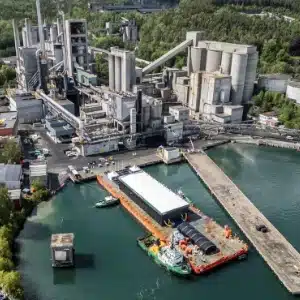
Installation of advanced capture technology at the cement plant to significantly reduce process emissions.
PROJECT
EnEarth is exclusively working with Heidelberg Materials to develop the first storage project in Bulgaria
The project stores 0,85 million tonnes of CO₂ per year from Heidelberg’s cement plant in Devnya, near Varna
CO₂ will be transported from the cement plant to the storage site via a 17km pipeline
The project is intended to be operational before 2030
The wider ANRAV project is planned to save 8.5 million tonnes of CO₂ equivalent in a period of 10 years
Devnya CO₂ is a large-scale, transport and storage (CCUS) initiative in Devnya, Bulgaria, forming part of the EU-supported ANRAV CCUS project.
The project will capture up to approximately 850,000 tonnes of CO₂ per year from the Devnya Cement plant, owned by Heidelberg Materials, and permanently store the CO₂ in secure geological formations.
As one of the first full-chain CCUS developments in Southeastern Europe, Devnya CO₂ represents a major step forward in the decarbonisation of hard-to-abate industry in the Black Sea region.
Devnya CO₂ is part of the ANRAV project which is designed as a complete CCUS value chain.
Installation of advanced capture technology at the cement plant to significantly reduce process emissions.

Development of dedicated infrastructure to transport captured CO₂ safely and efficiently.
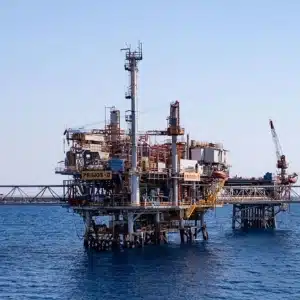
Injection of CO₂ into suitable geological formations for long-term, secure containment.
As a project of strategic importance within Europe’s industrial decarbonisation agenda, the Devnya CO2 project has applied for funding from the EU Innovation Fund.
By leading the storage development, EnEarth enables the full CCUS chain, transforming captured emissions into permanently stored carbon.
Beyond serving the Devnya Cement plant, the storage infrastructure is being developed with scalability in mind, with the potential to support additional industrial emitters in Bulgaria and the wider Black Sea region over time.