PROJECT
Prinos is the first and only licencesd storage project in South Europe, aiming to store up to 2.8 million tonnes of CO₂ annually.
When fully operational, Prinos CO₂ will store up to 2.8 million tons per year
Prinos CO₂ (2P) storage capacity is 51.5 MT, while (2C) capacity stands at 66 MT
Prinos CO₂ potential storage capacity is like planting 3.3 billion trees
EnEarth has signed 15 MoUs with hard-to-abate industries for 6.12 Mt CO₂ per year
Prinos CO₂ has secured €270 million euros in grants from EU and national sources
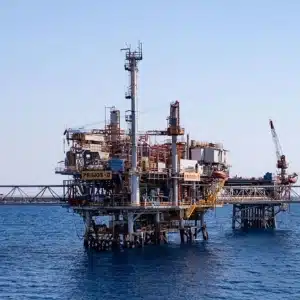
Located offshore of Kavala in Northern Greece, Prinos is the first licensed CO₂ storage site in the Mediterranean and Southeast Europe. Developed by EnEarth, the project is repurposing a mature offshore oil field into a strategic carbon storage facility, providing industries across Greece and the wider region with a safe, permanent and reliable solution for reducing industrial carbon emissions.
Prinos (2P) storage capacity has been estimated by NSAI at 2.8 million tonnes per year for at least 15 years. At full operational capacity, the project has the potential to manage approximately 30% of Greece’s current industrial CO₂ emissions, making it one of the country’s most significant decarbonisation infrastructures and a key contributor to achieving national and European climate objectives.
The strategic importance of Prinos has also been recognised at the European level. The project has been designated as a Project of Common Interest (PCI) by the European Union and has secured €270 million in funding through the Connecting Europe Facility (CEF), the Greek Recovery and Resilience Facility, and national funding sources. This support reflects the project’s critical role in strengthening Europe’s carbon management infrastructure and accelerating the transition to a low-carbon economy.
The Prinos Field, discovered in 1974 through the Prinos-1 exploration well, began production in 1981. The initial development phase, carried out between 1979 and 1981, established the offshore platforms and onshore processing facilities that later supported peak production of more than 27,000 barrels of oil per day in 1985. Since production commenced, the field has produced approximately 130 million barrels of oil equivalent.
A total of 76 wells have been drilled across the Prinos area since the 1970s. EnEarth has undertaken a comprehensive assessment of the entire well inventory, drawing on Energean’s more than four decades of subsurface, drilling and production expertise in the reservoir. This extensive knowledge and operational experience provide a strong foundation for the safe, reliable and effective transformation of Prinos from a mature hydrocarbon field into a permanent geological CO₂ storage site.
Prinos Carbon Storage is being developed in two phases to provide scalable, long-term CO₂ storage capacity. Phase 1 will repurpose existing infrastructure to store up to 1 million tonnes of CO₂ per year, while Phase 2, subject to additional studies and infrastructure development, is expected to increase capacity to up to 2.8 million tonnes per year.
Prinos Carbon Storage will receive compressed or liquefied CO₂ from hard-to-abate industries across Greece and the wider region, including future decarbonisation initiatives.
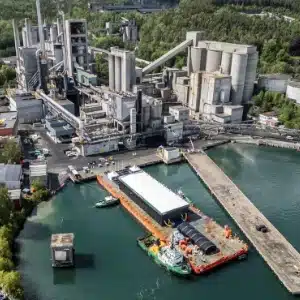
CO₂ transported from remote locations will be delivered by marine carriers to the Sigma marine terminal, where medium-pressure liquid CO₂ (MP LCO₂) will be temporarily stored before being processed. It will then be pumped, heated and transported via a new subsea pipeline to the OMEGA wellhead platform for permanent injection into the Prinos reservoir.
To support safe and efficient storage operations, water will be extracted from the reservoir to help manage reservoir pressure during CO₂ injection.
Prinos is ideally positioned to serve as a permanent CO₂ storage hub, combining proven geological suitability with a strategic location close to major industrial emitters in Greece and neighbouring countries that currently have limited access to viable carbon management solutions.
Once fully developed, Prinos is expected to have the capacity to store approximately 25–30% of the CO₂ emissions generated by Greece’s hard-to-abate industrial sectors. Independent studies indicate that the project could play a vital role in preserving the competitiveness of Greek industry, helping to safeguard an estimated 140,000 jobs, more than €15 billion in annual exports, and approximately €7 billion in annual GDP contribution across key sectors, including cement and refining.
Beyond supporting existing industries, Prinos is also expected to generate significant economic growth. The project has the potential to create approximately 32,000 high-quality jobs (around 29,000 temporary and 3,000 permanent) and contribute up to €0.4 billion in annual GDP between 2025 and 2044. This impact will be supported by more than €3.4 billion in announced capital investment (CAPEX), with approximately 45% of the total GDP impact generated through indirect and induced economic activity.

Prinos Carbon Storage will permanently re-inject non-flammable CO₂ into a geological reservoir that safely contained oil and natural gas for millions of years. The project applies the same geological principles, together with much of the existing technology and infrastructure that enabled Prinos to safely produce approximately 130 million barrels of oil equivalent—this time operating in reverse to permanently store CO₂ deep underground.
Prinos has been designed with safety, integrity and long-term performance at its core, supported by: