

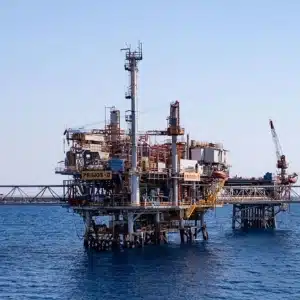
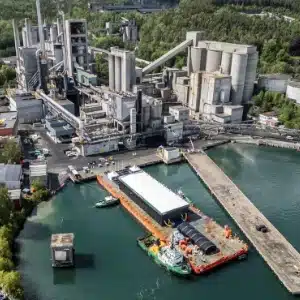

On Thursday, 17 September, EnEarth participated in the Dissemination Event entitled “Developing the Carbon Capture and Storage (CCS) Value Chain in Greece”, organised by the Centre for Renewable Energy Sources and Saving (CRES) at the Great Club of Kavala, within the framework of the European research projects Heroes in Southern Europe to Decarbonize Industry with CCUS (HERCCULES) and CO₂ Routes across Europe (COREu).
The event brought together leading scientists involved in the two research projects, executives from companies active across the CCS value chain, and members of the Kavala community.
In his welcome address to participants, EnEarth’s Head of Carbon Storage, Nikolas Rigas, noted that developing a CCS value chain is the only practical solution capable of reducing CO₂ emissions to the atmosphere, supporting the competitiveness of Greek industry and creating new green and high-technology products, as well as new opportunities for growth in Greece.
“Kavala pioneered hydrocarbon production in Greece for 45 years and is now leading the way with Prinos CO₂, which lies at the heart of the CCS value chain. It is the only project in Southeastern Europe to have secured both environmental approval and a CO₂ storage permit, and one of the most mature projects of its kind in the European Union,” Mr Rigas said. He added: “We are moving ahead in line with the schedule for the first well to be drilled in the opening months of the new year, bringing Prinos CO₂ firmly into reality. Centred on the project in the Gulf of Kavala, the CCS value chain supports the vision of a new generation and a better, more sustainable world,” Mr Rigas concluded.

In the presentation that followed, EnEarth Subsurface Manager Dr Paschalia Kiomourtzi and EnEarth Head of Commercial Development Dr Pantelis Vogiatzis presented the progress of Prinos CO₂ and its pivotal role in developing the CCS value chain in Greece and the wider region.
Dr Kiomourtzi outlined the project’s geological and technical characteristics, stressing that extensive knowledge of the subsurface and a comprehensive monitoring programme ensure the safe and permanent storage of CO₂ at Prinos. “Prinos’ suitability was further confirmed by the issuance of the CO₂ storage permit in February 2026, following the positive opinion delivered by the European Commission’s Directorate-General for Climate Action on the draft permit,” she said. The application process has also been initiated for the storage permit covering the project’s full capacity of 2.8 million tonnes per year, together with the related Environmental Impact Assessment. “The project is fostering extensive collaboration with companies and research institutions across Europe, while generating innovative and pioneering solutions throughout the carbon capture and storage value chain,” Dr Kiomourtzi concluded.
Dr Vogiatzis addressed the project’s commercial and regulatory maturity. “Greece now has the core primary and secondary regulatory framework required to develop the CCS market. The market test for allocating Prinos CO₂ storage capacity is expected to be launched shortly, marking the next decisive step from declared industrial interest to binding storage-capacity commitments. This interest is already reflected in 15 Memoranda of Understanding covering 6.12 million tonnes of CO₂ per year—more than twice the project’s planned capacity,” he noted. He added that Prinos CO₂, a Project of Common Interest (PCI) supported by substantial European and national funding, is being developed as open-access infrastructure serving industries in Greece and the wider region.
“The CCS value chain could create more than 30,000 new, specialised jobs across Greece through investments approaching €3.5 billion, strengthen opportunities for advanced education and employment for the next generation in Eastern Macedonia and Thrace, and introduce cutting-edge expertise,” said EnEarth’s Head of Communications and Corporate Affairs, Sotiris Chiotakis.

He also highlighted the economic benefits for local communities, noting that annual community payments alone are expected to range from €1 million from October 2027 to €5.6 million from 2030 onwards, when full commercial operation is scheduled to begin. Once fully developed, the CCS value chain centred on Prinos CO₂ will be able to store approximately 25%–30% of the annual emissions generated by Greece’s heavy industry, making a significant contribution to mitigating the effects of climate change.
Speeches and presentations at the Dissemination Event were delivered by Markos Damasiotis, Head of the Directorate for End-Use Technologies & Applications and Energy Saving at CRES; Dr Efthymios Tartaras, Head of Geosciences and Management Advisor at HEREMA; Kleopatra Avraam, Director of Strategic Planning at DESFA; Stefanos Mastrogiannis, Director of Carbon Capture, Utilisation and Storage at TITAN Group; Professor Stefano Consonni of Politecnico di Milano; Maurizio Spinelli, Scientific Researcher at the LEAP research centre; Stavros Niotis, Head of Sustainability at Prime Marine; and Andreas Georgakopoulos, Professor Emeritus at Aristotle University of Thessaloniki.

The event was moderated by Katerina Sfakianaki of the relevant CRES Directorate. Following the event, participants toured the Prinos offshore facilities and had the opportunity to receive a more detailed briefing on the CO₂ storage project.
The Dissemination Event was honoured by the presence and welcome addresses of Kavala Deputy Mayor Apostolos Moumtsakis, President of the Kavala Chamber of Commerce Yiannis Panagiotidis, and President
of the Technical Chamber of Greece – Eastern Macedonia Section Sotiris Lazaridis. Also in attendance were Deputy Regional Governor for Development of Eastern Macedonia and Thrace Alexandros Iosifidis and the CEO of the Hellenic Hydrocarbons and Energy Resources Management Company (HEREMA), Aristofanis Stefatos.
The HERCCULES and COREu projects, in which Energean/EnEarth participates, are among Europe’s most significant initiatives for developing the CO₂ capture, transport and storage value chain (CCS/CCUS). HERCCULES has a total budget of €39.65 million and brings together 25 partners, focusing on the demonstration of integrated CCUS solutions in Greece and Italy. COREu has a total budget of €35.70 million and brings together 43 partners from across Europe, with the objective of developing cross-border CO₂ transport and storage infrastructure and routes, including the Prinos CO₂ storage project. Together, the two projects represent investments of more than €75 million and collaboration among 68 organisations, underscoring the strategic role of Greece and Prinos in the development of Europe’s CCS market.
Carbon capture and storage is a core pillar of Greece’s National Energy and Climate Plan and of the country’s efforts to decarbonise domestic industry.


